Thanks for Reading

Phool Bazar ( Shop owner/vendors)

PhoolSetu (Small Flower Vendor)
Handicrafts of Gujarat
Role
UX/UI Designer
Project
Information Design
Tools
Figma · Figma Make
Duration
3 Weeks
Team
Individual
Bringing Gujarat’s Craft Heritage to the Digital World
OVERVIEW
TASK
RESEARCH & KEY INSIGHT
PROBLEM
USER FLOW
VISUAL DESIGN
FINAL DESIGN
PROTOTYPE
CHALLENGES
REFELECTION


Figure 1.1
Overview
Handicrafts of Gujarat is a cultural storytelling platform designed to digitally showcase Gujarat’s rich handicraft heritage through contemporary UI/UX design, interactive narratives, and editorial-inspired visual systems.
The project explores the relationship between traditional crafts, artisan communities, regional identities, and the wider craft ecosystem. It transforms craft-related research into a structured digital experience using visual storytelling, cultural exploration, and data visualizations.
Task
The task was to transform traditional handicraft documentation into an engaging digital storytelling experience that helps users explore Gujarat’s craft heritage.
The project focused on:
- Presenting craft information through a clear visual hierarchy.
- Structuring information about crafts and their regional distribution.
- Connecting craft traditions with artisan communities.
- Exploring local and export-market relationships.
- Using interactive storytelling and data visualization to make the information easier to explore.
Research Overview
My research focused on Gujarat’s craft traditions, artisan communities, regional craft clusters, and cultural archives. I also explored digital storytelling and editorial websites to understand how cultural information could be presented through an engaging online experience.
Introducing the Craft Heritage
The landing page introduces Gujarat’s handicraft heritage through large serif typography, layered imagery, and an editorial composition.
The visual approach uses a museum-like hierarchy to introduce the subject and invite users into the cultural storytelling experience.
The project translates research about Gujarat’s handicraft heritage into a digital storytelling experience using contemporary UI/UX design, editorial layouts, and interactive information structures.
The project translates research about Gujarat’s handicraft heritage into a digital storytelling experience using contemporary UI/UX design, editorial layouts, and interactive information structures.
Organizing complex information
The project brings together craft traditions, regional distribution, communities, and economic information.
Structuring these different topics into a coherent experience was an important part of the design.
Balancing editorial aesthetics with clarity
The interface needed to combine an expressive visual direction with readable and accessible information structures.
Representing cultural identity thoughtfully
The visual storytelling approach needed to support the heritage and regional identity of the crafts being presented.
Making data easier to explore
The project explored visualizations and structured layouts to communicate relationships across craft regions, communities, and markets.
Through this project, I developed a deeper understanding of how information design can transform complex cultural material into a more engaging digital experience.
I learned the importance of organizing large amounts of information, establishing a clear visual hierarchy, and using editorial storytelling and interaction to structure an experience.
The project also helped me explore how to balance aesthetics with clarity, structure large informational systems, consider the role of motion in storytelling, and approach cultural design with sensitivity and authenticity.
The final design explores how cultural information can be organized and presented through:
- Immersive storytelling.
- A distinct editorial visual identity.
- Structured craft and regional exploration.
- Data visualizations for craft-related information.
- A combination of cultural context and contemporary interface design.
Establishing the Cultural Context
The introduction presents Gujarat’s handicrafts as a living cultural system shaped by materials, regional identity, community practices, and generations of artisan knowledge.
It provides context for the craft traditions explored throughout the experience.
Exploring the Evolution of Craft
The timeline presents the evolution of Gujarat’s handicrafts through different historical periods, from early craft traditions to modern adaptation.
Archival imagery and handcrafted illustrations support the historical narrative and connect past traditions with the digital experience.
Discovering Crafts by Region
The regional exploration section organizes craft information geographically, helping users explore traditions associated with different parts of Gujarat.
The design uses regional navigation and craft-related information to connect places, communities, and techniques within a unified experience.
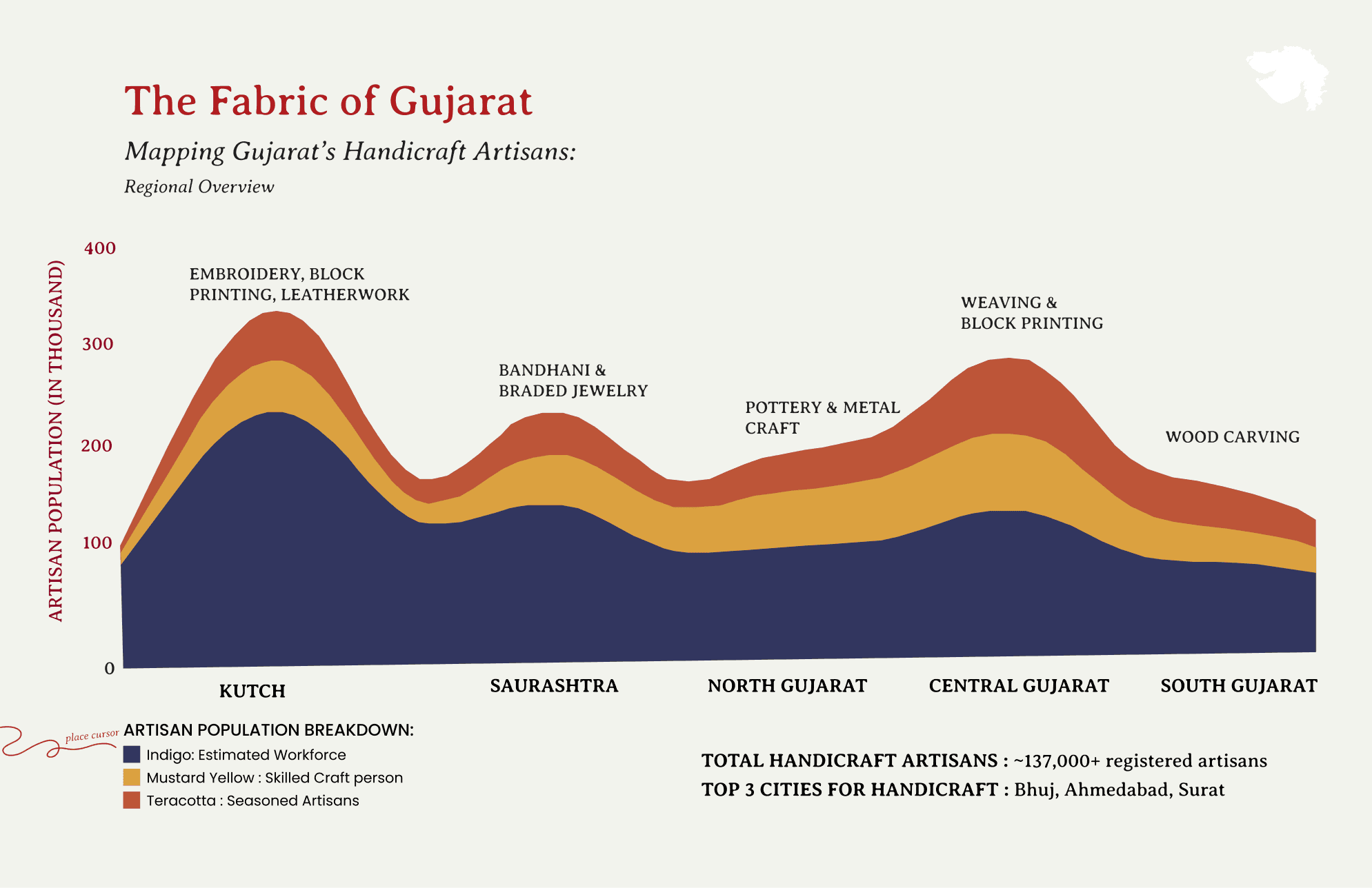
Making Relationships Visible
The project uses data visualization to explore the relationships between regional craft identities, artisan communities, livelihoods, and market systems.
The visualizations include regional craft information, artisan-related data, income analysis, and comparisons between local and export markets.
Making Relationships Visible
This section presents gender participation across selected handicraft sectors in Gujarat.
The visualization compares participation patterns across craft categories and uses contrasting visual elements and structured layouts to communicate the information.
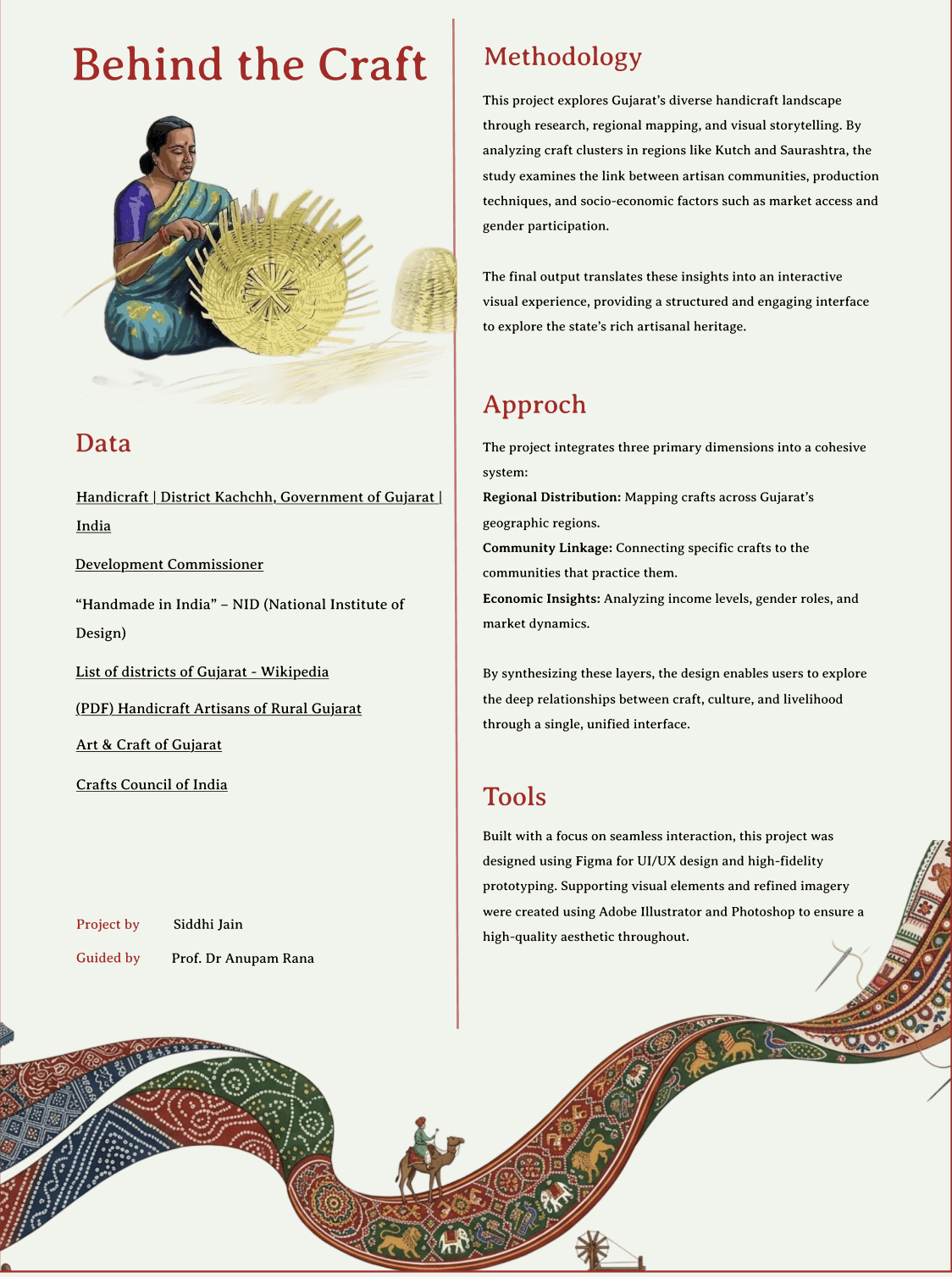
Connecting Research with the Experience
The project brings together research into craft regions, artisan communities, production techniques, and socio-economic factors such as market access and gender participation.
The resulting interface combines these dimensions through regional exploration, community connections, and economic insights.


Process
Design Solution
Result / Design Outcome
Challenges
Reflection
4.2 Key Insights
4.3 Problem Statement
4.5 User Flow
4.6 Visual Direction — Typography & Colour
4.1 Research
5.1 Landing Page
5.2 Introduction Section
5.3 Historical Timeline
5.4 Regional Craft Exploration
5.5 Craft Ecosystem & Data Visualization
5.6 Gender Participation
5.7 Behind the Craft / Methodology
Website Link -
01 — Craft is more than information
Handicrafts are connected to identity, memory, and tradition. The experience therefore needed to communicate more than factual descriptions alone.
Design Opportunities
Make craft information easier to discover.
Introduce more engaging cultural storytelling.
Help users explore craft regions and communities.
Present local and export-market information visually.
Create a contemporary interface that respects the cultural subject matter.
Structuring the Experience
The user flow organizes the experience into a sequence that begins with an introduction to Gujarat’s handicrafts and continues through craft exploration, historical context, regional information, and livelihood-related insights.
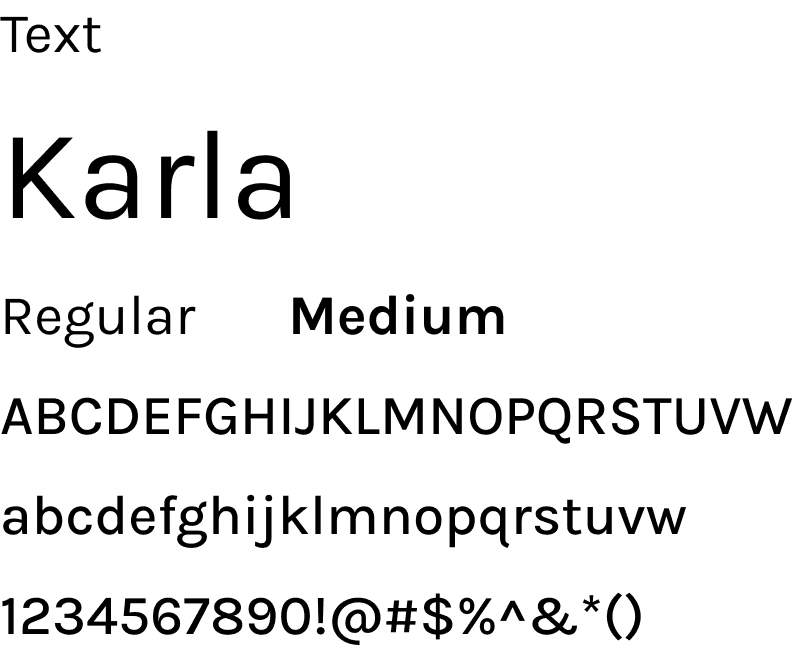
Creating the Visual Language
The visual direction combines a contemporary interface with an editorial style inspired by cultural archives and handcrafted heritage.
The typography and colour palette were selected to create a minimal, elegant identity while reflecting the project’s cultural subject matter.

The flow includes:
Hero section
Introduction to Gujarat handicrafts
Interactive craft cards
Historical timeline
Regional craft exploration
Local versus export-market visualization
Livelihood and gender insights
Behind the craft / methodology
Final reflection
02 — Visual storytelling can support exploration
Narrative-based layouts, imagery, and interaction offered a way to present cultural information in a more engaging format.
03 — Regional identity matters
Different regions have distinct craft traditions and visual identities. The design needed to make regional exploration an important part of the experience.
04 — Craft traditions are interconnected
Crafts exist within broader networks of artisans, villages, markets, exports, and inherited knowledge.
05 — Interaction can make complex information easier to explore
The project explored motion, interaction, and editorial composition as ways to encourage curiosity and support information engagement.
The project’s research and exploration highlighted several themes that shaped the design direction:
Gujarat’s handicrafts represent a rich cultural heritage, but traditional documentation can be difficult to explore when it is presented through static, text-heavy, or visually outdated formats.
The project identified opportunities to improve how users discover craft traditions, understand regional and market relationships, and connect with the stories behind the crafts.


Dark Red
#AF1C20
Off - White
#F2F3ED
Dark Blue
#32365F
Dark Orange
#E18C18


Full Case Study


Historical Timeline
Historical Timeline
Historical Timeline
Gender Participation


Home Page
Introduction page
